Tablets IX and X of the Epic of Gilgamesh
What happens in tablets nine and ten of Gilgamesh is that, after Enkidu dies, Gilgamesh goes into deep sorrow and grief. Everyone in Mesopotamia mourns his lost friend, and the King of Uruk orderes a great statue to be made in honor to his fallen friend. "Gilgamesh called together the makers of statues, lapidaries, forgers, workers in copper and gold, and commanded that there be made a statue of him, of Enkidu the companion, to honor his deeds."-pgs 46-47 (this is actually the tablet eight).
I can relate this to the movie Extremely Loud but Incredibly Close because the kid makes a room in honor of his lost dad. The kid also cries a lot and blames himself for the death of his father. It is like the feeling Gilgamesh is feeling about Enkidu's death.
Lost in grief, he wandered into the wilderness and asks himself if he should die too. "Enkidu has died. Must I die too? Must Gilgamesh be like that?"- page 48. He is afraid of death so he decides to make a journey to see Utnapishtim, who is the only mortal granted immortality by the gods.
It is evident that he is afraid of death. He decides he will not die, so that is why he chose to seek immortality. However, in his journey he prays to the gods so that they protect him from danger. "'Hear my prayer and save me as I enter into the passes where there are lions!'"-pg 49.
He arrives at Mashu, a twin headed mountain guarded by twin scorpions. Again, Gilgamesh is terrorized. Nevertheless, he continues with his journey. He walks twelve hours straight in complete darkness, companionless. Then he emerges into the sunlight and sees a magnificent garden and the ocean. "He emerged from the mountain into a wonderful garden. Gilgamesh looked at the garden and wondered at it. The fruit and foliage of the trees were all the colors of the jewels of the world, carnelian and lapis lazuli, jasper, rubies, agate, and hematite, emerald, and all the other gems the earth has yielded for the delight and pleasure of kings. And beyond the garden Gilgamesh saw the sea."-pg 53
In the seashore, he walks towards a tabern where Siduri, the bartender, doesn't let him in. She doesn't believe that he is Gilgamesh because he is full of dirt and rags. This reminds me of Ulysses in the Odyssey because when he finally came home after his long journey nobody recognized him since he looked like a peasant.
Gilgamesh asks her where Utnapishtim is, that he will cross oceans to get to where he is. "'If I must cross the sea, I will cross the sea'"-pg 57. Siduri tells him that the boatman Urshanabi is the only one that knows where Utnapishtim lies. Gilgamesh goes to find the boatman and kills the Stone Things. Then he builds a raft with 120 poles and sets to sea with the boatman. They reached a part where they couldn't touch the water, so he broke all poles and they had to set sail.
Utnapishtim watches the boat come, and he doesn't know who is with Urshanabi. Gilgamesh tells him his intentions, even though he did not know he was talking to Utnapisthim. Utnapishtim tells Gilgamesh that everething has a beginning and an end: contracts, hatred, friendship, and life. That is how the tablet ended.
Tuesday, September 4, 2012

Tuesday, August 28, 2012
Reading Blog: Tablets IV and V Gilgamesh
Actually, being human kind's most ancient writing, The Epic of Gilgamesh is not really that bad. I thought that it was going to be boring, difficult to understand, and simple. My expectations were wrong...
When reading tablets four and five, I made a connection to Paulo Coelho's book The Alchemist since it talked about dreams and signs of the gods. Enkidu described the dreams as fortunate. I made the connection to The Alchemist because in the book it talks a lot about omens and signs from nature.
I also made a connection to a movie. When I read that Huwuwa was the demon of the forest, I automatically thought of Dr. Seuss's Lorax. I know it is a rather curious connection, since Huwuwa is an evil demon and the Lorax is the protector of the forest, but nevertheless, I thought about him.
In Gilgamesh, the gods decide the fate of the humans. Since for my spanish class I have been reading the Iliad, I had to make the connection. In Homer's extensive poem, the Olympian gods decide the fate of the war of Troy. In this book however, Enkidu and Gilgamesh's fate is decided by Shamash, who attacks Huwuwa by sending his thirteen winds.
So far I have liked this book. And I congratulate Gilgamesh for writing this epic tale (yes, he wrote his own Epic). I actually never thought that this ancient writing would be so interesting.

Wednesday, August 22, 2012
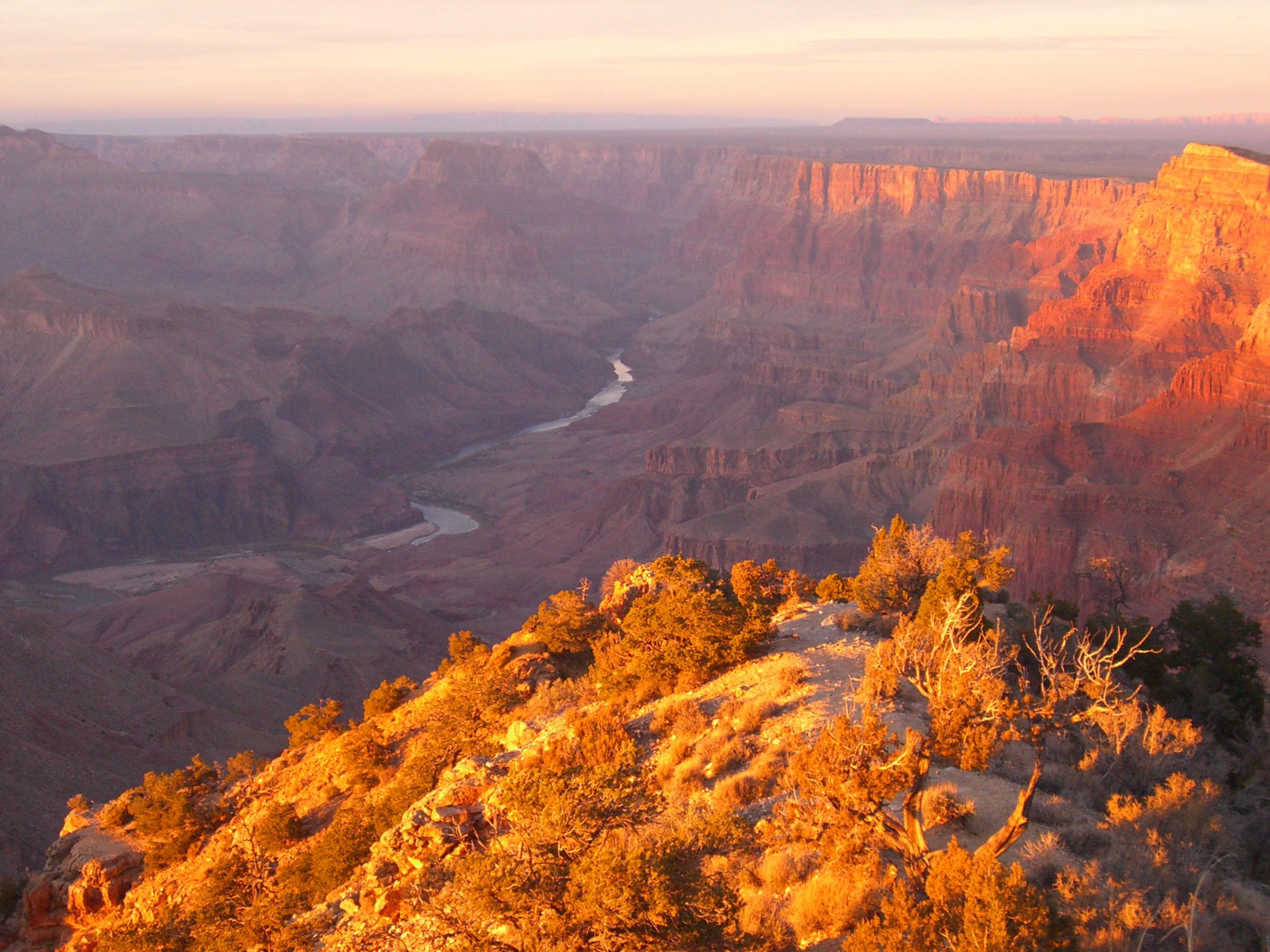
Photo Inference
Grand Canyon photo
1: Once in history, water flowed through the area.
2: The temperatures should be very high there.
3: Few wildlife can be found in the area.

1: Once in history, water flowed through the area.
2: The temperatures should be very high there.
3: Few wildlife can be found in the area.
Sunday, August 19, 2012

Subscribe to:
Posts (Atom)